Table of Contents
- Understanding CDCP Co‑Payment Percentages: A Guide for Canadian Families
- Decoding CDCP Co‑Payment Percentages and Income Tiers
- Financial Benefits of the Canadian Dental Care Plan Co‑Payment Structure
- How CDCP Co‑Payments Are Calculated and Applied
- Navigating Your CDCP Coverage: Tips and Best Practices
- Planning Your Dental Care Under the CDCP in New Westminster
Understanding CDCP Co-Payment Percentages: A Guide for Canadian Families
What Are CDCP Co-Payment Percentages?
CDCP co-payment percentages represent the portion of dental treatment costs that your family pays out-of-pocket after the Canadian Dental Care Plan (CDCP) contributes its share. These rates are determined solely by your adjusted family net income — the higher your household income, the greater the percentage you’ll be responsible for. According to the Government of Canada, households with lower incomes may pay as little as 0% for preventive services, while those near the upper income limit could contribute up to 40% for restorative treatments. The program has no deductibles; only these income-based co-payments apply.
What This Guide Covers
In this guide we’ll break down everything you need to know about Canadian dental care plan coverage and how your CDCP co-payment percentages are applied. We’ll cover:
- The income thresholds that determine your CDCP co-payment tier
- How co-payment amounts are calculated using the CDCP dental fee schedule
- Step-by-step guidance for accessing your benefits and using them at the dental office
- Real-life scenarios that show how co-payments reduce your out-of-pocket costs
We’ll also demonstrate how these rates affect common services, including CDCP dental cleaning and scaling units, so you can plan your family’s dental care with confidence.
Decoding CDCP Co-Payment Percentages and Income Tiers
Now that you know what the Canadian Dental Care Plan covers, let’s break down the CDCP co-payment percentages that determine how much you’ll pay out of pocket based on your family income. These percentages reflect your share of eligible dental fees, while the government covers the remainder. At Diamond Dental Centre, we’re here to help you navigate these income tiers so you can plan your dental care with confidence.
What Are CDCP Co-Payment Percentages?
Your co-payment percentage is the portion of eligible dental fees you’re responsible for paying under the Canadian Dental Care Plan. According to the Government of Canada, the rest is paid directly by the plan. This income-based co-payment means that the more your family earns, the higher your share becomes, up to a certain limit. The good news? Households with an adjusted family net income of less than $70,000 owe nothing. CDCP covers 100% of the cost of eligible treatments in that bracket. Before we look at co-payment percentages, it helps to understand the full scope of CDCP dental services coverage. Knowing which treatments qualify gives you a clearer picture of your potential out-of-pocket costs. At our clinic, we see many patients who are relieved to learn that preventive care like exams and cleanings often requires little or no co-payment once you’re in the lowest income tier. We’ll walk you through the details when you visit.
Income Thresholds and Co-Payment Levels for 2026
The Canadian Dental Care Plan coverage is structured around specific income brackets that determine your co-payment rate. For the 2026 benefit year, the Government of Canada has published these official thresholds:
- Adjusted family net income below $70,000: 0% co-payment (CDCP covers 100% of eligible fees)
- $70,000 – $79,999: 40% co-payment
- $80,000 – $89,999: 60% co-payment
- $90,000 or above: no CDCP coverage
Once your income places you in a bracket, your co-payment applies to every eligible service. For instance, a family earning $75,000 falls into the 40% tier—they pay 40% of the fee, while the plan pays 60%. These percentages are set by the federal government and may be updated annually. At Diamond Dental Centre, we stay current on these figures so we can provide you with a reliable estimate of your out-of-pocket costs before any procedure.
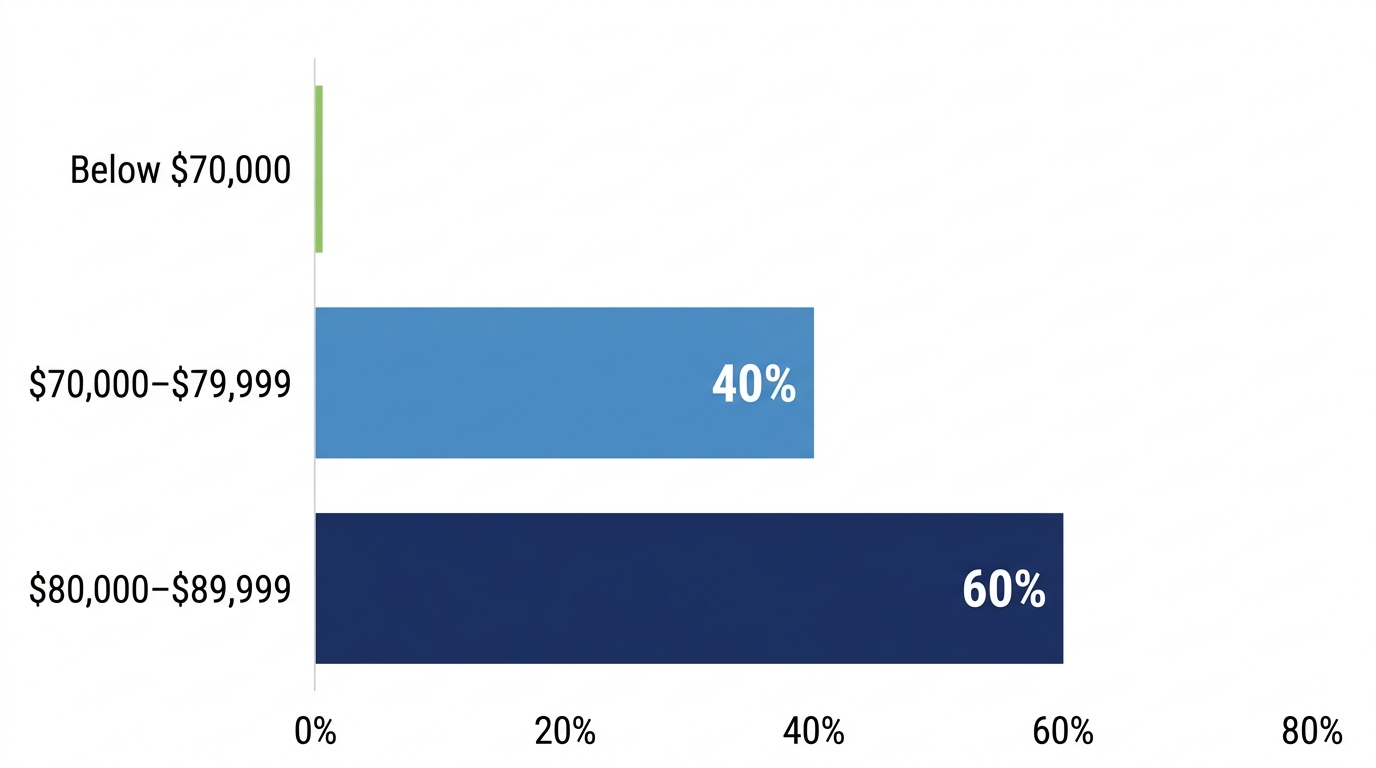
CDCP co-payment percentages by annual family net income.
Now that you see the income-based percentages, let’s look at how the government calculates your adjusted family net income.
How Adjusted Family Net Income Determines Your Share
Adjusted family net income is the figure the government uses to decide which co-payment tier applies to you. It is calculated by taking the total income of all family members and subtracting eligible deductions, such as RRSP contributions and child care expenses. This number is pulled from your most recent tax return, meaning your 2025 tax filing determines your CDCP co-payment for the 2026 benefit year.
Consider a household with an adjusted family net income of $75,000. They fall into the 40% co-payment bracket. If they visit the dentist for a filling that costs $200 under the CDCP dental fee schedule, the patient pays $80 out of pocket and the plan covers the remaining $120.
At Diamond Dental Centre, we handle these calculations for you, so you always know your exact share before treatment. With your co-payment tier known, you’re ready to explore how CDCP applies to different dental treatments.
Financial Benefits of the Canadian Dental Care Plan Co-Payment Structure
Once enrolled in the Canadian Dental Care Plan (CDCP), one of the most important questions is how the CDCP co-payment percentages affect your finances. The plan’s co-payment model is designed to make dental care more affordable for households across Canada by reducing the amount you pay out of pocket for essential services. In this section, we’ll walk through the financial advantages so you can see exactly how the structure keeps your costs low.
Reducing Out-of-Pocket Costs for Preventive Care
Preventive care sits at the heart of the CDCP, and its co-payment structure directly cuts what you spend on routine visits. Common services like periodic exams, professional cleanings, fluoride applications, and diagnostic X-rays are all covered under the plan. Instead of paying full private fees, you pay a small co-payment — a fraction of the negotiated fee that the government pays directly to the dentist.
For eligible patients in New Westminster, this means regular checkups become financially accessible. Our team has seen how this lower cost barrier encourages patients to prioritize preventive care, which helps catch oral health issues early and avoids expensive restorative work later on. Even with the co-payment, the out-of-pocket expense is far less than what you would face without the CDCP.
Coverage Scope: Eligible Services Under CDCP
Understanding what is and isn’t covered helps you budget with confidence. Beyond preventive treatments, the canadian dental care plan coverage extends to essential restorative services such as fillings and dentures (both partial and full). These procedures are subject to the co-payment, with your share determined by your adjusted family net income.
It is equally important to know what falls outside the plan. Dental implants and Invisalign are not covered under the CDCP, meaning no co-payment applies to these treatments. At Diamond Dental Centre, we offer these services separately for patients who choose them. For a complete overview of what the plan includes, refer to our comprehensive guide on cdcp dental services coverage. This clarity lets you plan your care without surprise expenses.
Understanding Full Reimbursement for Low-Income Families
One of the plan’s strongest financial features is its income-based reimbursement path. The CDCP uses a sliding scale — families in the lowest income bracket can eventually receive full reimbursement for covered services, while higher brackets pay a fixed CDCP co-payment percentage based on the CDCP dental fee schedule. This design ensures that the most financially vulnerable households are not left behind.
Here is how it works: the government sends a negotiated fee to the dental clinic, and you pay your co-payment upfront. After a waiting period, low-income families can submit for reimbursement of that amount. Our denture FAQ confirms that both partial and full dentures qualify under this structure, and our team can help you with the paperwork. By closing the gap between what the plan pays and what you owe, the reimbursement path makes necessary care attainable for everyone.
Understanding these benefits helps you prepare for your first appointment under the CDCP.
How CDCP Co-Payments Are Calculated and Applied
Now that we’ve covered what the Canadian Dental Care Plan includes, it’s time to look at how your out-of-pocket share is determined. The plan uses a simple co-payment structure where CDCP co-payment percentages set your portion of each treatment cost—there are no deductibles, just a percentage based on your adjusted family net income.
The 40% Co-Payment Calculation Explained
For families whose adjusted net income stays below $80,000, the base co-payment is 40%. That means for every covered procedure, the CDCP pays 60% and you pay the remaining 40% directly to your dentist.
Let’s walk through a concrete example. If the CDCP fee schedule sets the allowed amount for a dental filling at $200, the math works like this: the government portion of $120 covers 60%, and your co-payment of $80 represents the 40% balance. This patient share applies per procedure, not as an annual deductible, and the amounts are calculated against the official fee schedule—never against a clinic’s own list price. This is exactly how CDCP co-payment percentages function in day-to-day treatment planning, giving you a predictable way to estimate costs before you sit in the chair.
Higher Income Tiers and Increased Co-Payment Levels
As household income rises, so does the co-payment percentage—a tiered approach that keeps the plan equitable. Here’s how the thresholds work under the Canadian Dental Care Plan coverage:
- Adjusted family net income below $80,000 → 40% co-payment
- Adjusted family net income between $80,000 and $89,999 → 50% co-payment
- Adjusted family net income of $90,000 or more → 60% co-payment
Using the same $200 CDCP fee example, a family earning $85,000 would pay $100 (50%), while a family at the top tier would contribute $120 (60%). These percentages are set by the Government of Canada and apply to each claim, so your actual out-of-pocket expense will vary depending on the procedure’s fee schedule amount and your income bracket.
Fee Schedule Comparison: CDCP vs. BC Dental Association Rates
It’s important to understand that the CDCP operates on its own CDCP dental fee schedule, which may not match the suggested rates published by the BC Dental Association. The government determines the reimbursement amount for each service, and in many cases this figure is lower than what provincial fee guides recommend.
When a dental clinic charges more than the CDCP fee schedule allows, the patient may need to pay the difference—this is often called balance billing. How a practice handles that gap varies widely across British Columbia. We always recommend asking your dentist for a pre-treatment estimate that shows the CDCP amount, the clinic’s usual fee, and any balance you might owe. Many clinics handle this differently—check with your dentist so there are no surprises.
For the most current co-payment tiers and fee schedule amounts, refer directly to the Canada Dental Care Plan government resources. Understanding your co-payment is the first step—next we’ll show you how to apply for benefits, and we’re always here to answer your questions in our judgement free space.
Navigating Your CDCP Coverage: Tips and Best Practices
Now that you understand what the CDCP covers, let’s walk through how to make the most of your plan. Understanding your CDCP co-payment percentages is the first step toward a stress-free dental visit. The Canadian Dental Care Plan unlocks essential oral health services for eligible residents in New Westminster, but knowing how to verify your coverage and find a trusted local provider makes all the difference. We care about your smile and want you to feel confident every time you sit in our chair.
How to Verify Your Co-Payment Responsibility Before Treatment
Your co-payment responsibility depends on your adjusted family net income, and the Sun Life portal makes it easy to check before you arrive. According to our extensive internal guide at Diamond Dental Centre, logging into the portal gives you a clear picture of where you stand.
Here’s what to do:
- Log into your Sun Life portal using your personal credentials.
- Navigate to the CDCP Coverage section to view your assigned co-payment bracket.
- Note the percentage listed: this is the portion you’ll pay directly to the dentist.
Preventive services, such as routine cleanings and exams, typically attract lower CDCP co-payment rates, often between 0 and 10 percent based on data from the Government of Canada. Restorative and emergency procedures generally fall into slightly higher co-payment brackets. Knowing your rate up front removes the guesswork and helps you budget confidently.
Locating CDCP-Accepted Dentists in New Westminster
Once you know your co-payment bracket, finding a dental office that accepts the Canadian Dental Care Plan coverage is the next priority. Start by calling the clinic’s front desk and asking two key questions:
- “Is your practice registered with the Canadian Dental Care Plan?”
- “Will you bill the CDCP directly for the covered portion?”
A registered clinic that handles direct billing means you only pay your co-payment at the time of service, avoiding the hassle of submitting claims yourself. At Diamond Dental Centre, we are a fully CDCP-registered practice in New Westminster and we bill the plan directly for the covered portion. Our FAQ page confirms that preventive services like exams, cleanings, and X-rays fall under CDCP coverage, so you can receive essential care with minimal out-of-pocket expense. Choosing a local office that understands the program’s details ensures a smooth experience from check-in to checkout.
Managing Additional Costs Beyond the CDCP Fee Schedule
The CDCP pays according to a fixed CDCP dental fee schedule, which means there can be a gap between what the plan covers and a clinic’s standard fee. If your dentist’s rates exceed that schedule, you may be responsible for the difference. To avoid surprises, we recommend requesting a written estimate before any treatment.
A clear estimate should list:
- The CDCP-covered amount
- The clinic’s full fee
- Any potential out-of-pocket difference
For optional or elective procedures not covered under the Canadian Dental Care Plan—such as cosmetic treatments like teeth whitening—ask for a separate estimate and confirm that those services are not mistakenly billed as CDCP items. Our team at Diamond Dental Centre, drawing from our internal CDCP coverage guide, always provides transparent estimates, so you’ll know your exact financial responsibility before any work begins. Once you’ve reviewed these tips, contact our clinic to schedule your visit and experience judgement-free, high-quality dental care.
We care about your smile and look forward to welcoming you to our newly upgraded space in New Westminster.
Planning Your Dental Care Under the CDCP in New Westminster
Key Takeaways on Co-Payment Percentages
Understanding CDCP co-payment percentages helps you plan your budget before you book. According to the Government of Canada’s Canadian Dental Care Plan, here’s how your share breaks down by adjusted household income:
- Families with adjusted net income under $70,000: 0% co-payment (the plan covers 100%)
- Income between $70,000 and $79,999: 40% co-payment (plan covers 60%)
- Income between $80,000 and $89,999: 60% co-payment (plan covers 40%)
These CDCP co-payment percentages apply to the CDCP dental fee schedule, not to any extra clinic fees. At Diamond Dental Centre, we provide a judgement free space to help you understand your personal costs under the plan. We care about your smile and want you to feel confident about your budget.
Preparing for Your Next Dental Visit
Once you know your co-payment tier, take these simple steps to prepare for your appointment at Diamond Dental Centre in New Westminster:
- Verify your Canadian Dental Care Plan coverage by logging into the Sun Life CDCP portal with your member ID and checking your active benefits.
- Confirm that the services you need align with the CDCP dental fee schedule, as co-payments apply only to covered fees.
- Call us at (604) 449-7689 or use our online booking tool to schedule your visit.
We’ll verify your eligibility, answer questions, and welcome you into our judgement free space. We care about your smile and look forward to helping you maximize your plan.