Table of Contents
How to Fix Loose Dentures
Loose dentures can be frustrating and uncomfortable, slipping while you’re eating or speaking and leaving sore spots that affect your confidence. Our patients tell us these shifts are common and usually manageable with proper care and professional support.
This guide walks through practical, safe steps to help you address loose dentures, from daily habits that support a better fit to knowing when it’s time to see a dentist for adjustments or relining. As our denture guide explains, looseness often develops naturally as jawbone and gum contours change over time, which is why dentures that once fit well can feel loose later. Before trying any fix, it helps to understand what causes looseness and how to approach it safely, so you can move forward with confidence.
Key Takeaways
- We know how frustrating it can be when dentures feel loose, but it’s important to approach fixing loose dentures safely.
- When a loose denture pops up, it suggests checking yourself quickly before making an attempt at any at-home fixes.
- The first thing you should take into account when learning how to fix loose dentures will be cleaning your mouth appliance on daily basis.
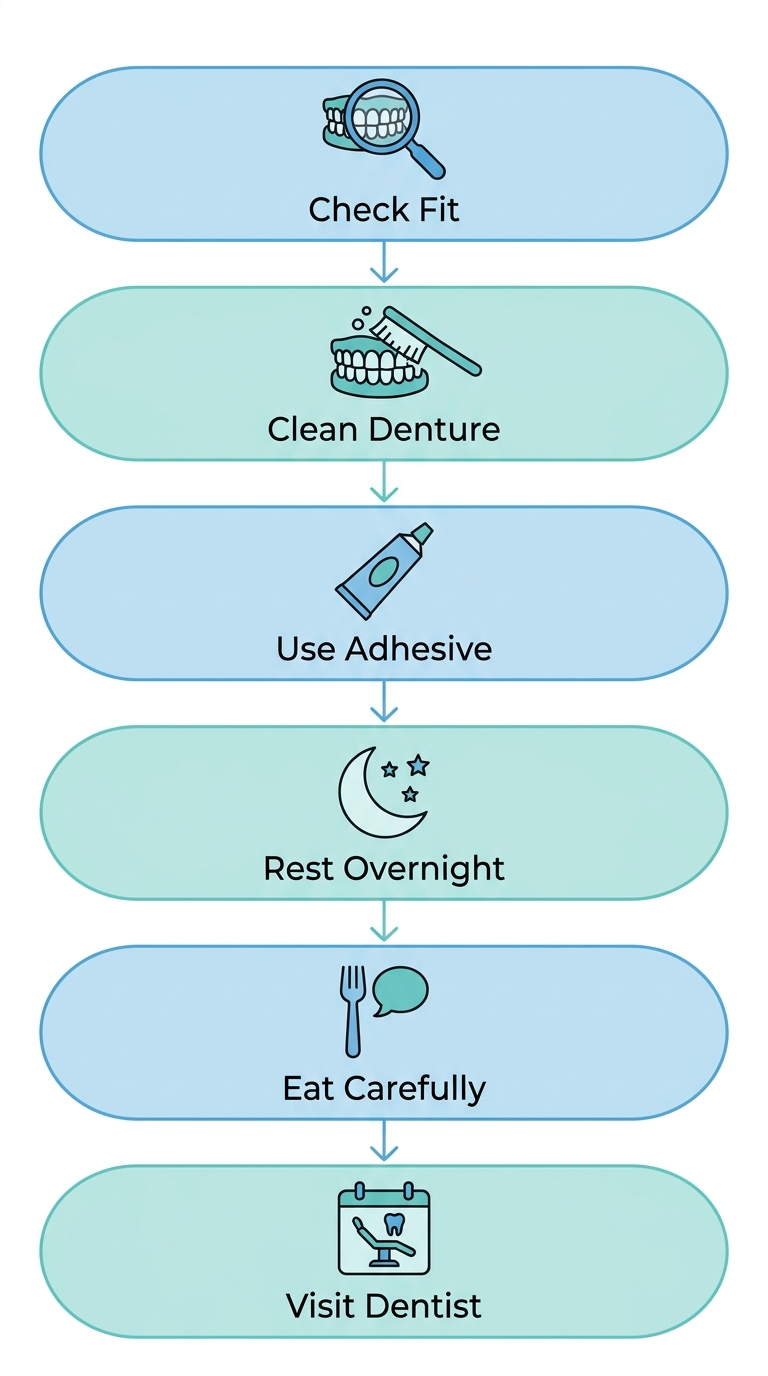
- We have our clean and slightly wet dentures prepared to be fitted with some adhesive.
- After a full day wearing them securely, you should remove them at night in order for your gums to have some breathing room.
Getting Ready to Address Loose Dentures Safely
We know how frustrating it can be when dentures feel loose, but it’s important to approach fixing loose dentures safely. While minor troubleshooting can help temporarily, denture adhesives are not a long-term solution for an ill-fitting appliance. If your dentures feel persistently loose, cause sores, or lead to inflammation, it’s time to seek professional evaluation to protect your oral health and prevent bone loss.
Do not clean dental plates under hot, steaming or boiling water, which can warp the material and ruin the fit. Water or denture cleaner should be used instead. When cleaning, use only non-abrasive cleaners or mild soap, standard toothpaste can scratch the plate’s surface and create spaces where bacteria can thrive. This will scratch the plate making it a suitable environment for bacteria growth. Leave the plates out at night rather than sleep wearing them because this can cause irritation to your gums as well as increasing the risk of a fungal infection.
Now that you have decided to do something about the problem with your dentures, start off by checking if they still fit properly or not.
Step 1: Check the Fit of Your Dentures
When a loose denture pops up, it suggests checking yourself quickly before making an attempt at any at-home fixes. As we age, our bone and gum tissues slowly shift position as they gradually get older, and this could cause even properly fitting dentures to become uneasy. For this reason, it is always recommended you look closely if you see changes in your fit of teeth so you may know when it needs professional repair versus doing things yourself.
At home you should put it in your mouth, bite down gently, and feel if there is any movement. Using your tongue, run it over its edge and see whether any parts make your mouth sore, or if it causes irritation on that part that it touches the gums. Watch for gaps between the denture and gums, especially while chewing or speaking, as these are common signs of a poor fit.
Step 2: Clean Your Dentures Thoroughly
The first thing you should take into account when learning how to fix loose dentures will be cleaning your mouth appliance on daily basis. That means brushing them with a soft-bristle brush and a denture-safe cleaner to remove food particles and prevent buildup that can affect fit and comfort.
If you want to soak your denture then don’t use any sort of hot or boiling water since this may deform your denture’s form, and would make it much harder for you to get used to it again. Also, refrain yourself from using abrasive cleaning agent such as tooth paste or scouring powder because they’re likely to scratch on the surface of the denture making it difficult to wear after some period of time. Keep your denture soaked all the time at either a glass of water or some cleaning liquid whilst you aren’t utilizing it. This will keep the denture in shape and stops it getting too dry.
Make sure that they’re all spotless and dry before moving on to the next phase: making certain that the adhesive has been placed properly so that you can feel good about your smile again.
Step 3: Apply Denture Adhesive Correctly
We have our clean and slightly wet dentures prepared to be fitted with some adhesive. Be careful as you need only a little bit…about the size of a pea….not too much, otherwise when you remove them later its going to get all over.
Adhesive may be applied along clean ridges on the upper denture before seating it in its mouthpiece, holding until adhesive has set. If required, repeat application on the lower denture as well. While adhesive can improve comfort and stability, it does not solve loosening problems permanently.
According to the ADA, some zinc-containing adhesives can cause numbness or tingling in the extremities when overused, so always follow the product directions and never exceed the recommended amount. And if those dentures are still moving around or making you uncomfortable, take them back to get their fit checked out to stop losing jawbone and ensure you won’t deal with problems down the road.
Step 4: Give Your Gums a Rest
After a full day wearing them securely, you should remove them at night in order for your gums to have some breathing room. This can help prevent the gums from becoming irritated due to friction and can lessen the chance that a fungal infection forms because of constant pressure. Constant wear can also create microscopic scratches on the denture surface, giving bacteria more places to hide.
Clean your dentures each night before bed: take them out gently, clean them with a non-abrasive cleaner or mild soap (avoid standard toothpaste, which can scratch the surface), and store them safely until morning. Store your dentures safely until morning. As your jaw changes over time, regular checkups and periodic refittings will keep you comfy in your new set.
If soreness lingers, don’t wait—let us check the fit so you can keep smiling with confidence.
Step 5: Adjust Your Eating and Speaking Habits
Once your gums have settled, mealtimes and talking may still take some getting used to while your dentures adjust. Try eating soft foods that are chopped up in to small bite sized chunks. Chewing evenly on each side will help ensure your dentures sit correctly in your mouth and give you peace of mind. Many of our patients say that they start feeling less anxious about wearing their dentures straight away once they’ve started eating this way.
Talk. Read out loud or practice tough words in private. It’s a low-key method for training your mouth and making you more comfortable over time. Little changes like this will help you get used to your new routine as your false teeth get adjusted.
These temporary solutions don’t fix a loose fit. If you’re still relying on them after a few weeks, or if you notice persistent looseness, sores, or inflammation, it’s time to book a professional evaluation to prevent further issues.
Step 6: Book a Professional Adjustment or Reline
If there’s still some loose space on your teeth at all times now, no amount of chewing or yawning will help. Then it’s best to schedule a professional adjustment or reline. When your dentist tells you how to fix loose dentures, they’ll recommend getting them readjusted or resurfaced. Since you have all shifted since you got them put into place initially, your jaws and gums change shapes as well and a reline fixes these changes and makes your dentures feel secure against your mouth once more.
Our dental care specialists will reshape or add material on the insides of your dentures as needed to make sure that they fit the shape of your mouth properly as you age. These office visits should be done regularly as a part of any routine denture maintenance program since this will help ensure that your dentures remain comfortable for you and still work efficiently when placed in your mouth. If looseness keeps coming back, talk to us about longer-term solutions we can explore together to give you lasting confidence in your smile.
Step 7: Explore Long-Term Options Like Implant-Supported Dentures
If home remedies for loose dentures don’t work, you may benefit from implant-supported dentures. This method secures into your jaw bone for permanent stabilization, as well as optimal retention. This alternative is most frequently recommended for people living near New Westminster who find their denture isn’t staying in place on a consistent basis, since the dental implants assist your jaw bone in retaining its shape through the years.
The process begins with a personalized consultation, followed by the gentle placement of titanium posts that bond with your bone through osseointegration. While your implants heal, we provide temporary dentures so you can eat, speak, and smile with confidence. Some patients may also benefit from overdentures that attach to remaining tooth roots for improved retention.
If your denture no longer fits well despite all adjustments, it’s time to ask us whether implant-supported dentures could be right for you.
When Home Fixes Aren’t Enough
We know how it goes: you’ve tried every adhesive, paste, and at-home trick to keep your dentures steady, and while they help for a little while, the looseness keeps coming back. The American Dental Association advises that adhesives aren’t meant to be a long-term fix for persistent looseness; they’re designed to enhance fit, not replace a properly fitted appliance. If your dentures still feel wobbly, or if you notice sores or irritation where they press, it’s time to stop patching the problem at home and seek a professional evaluation.
Ignore any of those signs, and you might end up with chronic bone loss. Don’t delay: if your dentures are older than five years, cracked, or noticeably discoloured, they’ve likely worn past their prime and should be assessed for relining or replacement rather than patched up again. Oh yeah, one last thing: never use hot or boiling water to clean or loosen your dentures — it can warp the material and make the fit even worse.
At Diamond Dental Centre in New Westminster, our denturist takes the time to fit your dentures properly, whether you need conventional dentures fitted after your tissues have healed or overdentures anchored by remaining tooth roots or implants for superior stability. A professional assessment can restore both comfort and confidence, and it’s simpler than you might think to get back to feeling like yourself again.
Frequently Asked Questions
Is it safe to use denture adhesive to fix loose dentures at home?
Denture adhesive is not a long-term solution for ill-fitting dentures. It can temporarily improve comfort and stability but does not address the underlying fit issues. Overuse of zinc-containing adhesives may cause numbness or tingling in the extremities.
What are the professional options for repairing loose dentures such as relining or rebasing?
Professional options include relining or rebasing to reshape the inside of dentures for a better fit. Dentists can also adjust or replace worn dentures. These adjustments compensate for natural changes in jawbone and gum contours over time.
When should I consider dental implants as a permanent solution for loose dentures?
Dental implants may be considered when dentures no longer fit well despite adjustments. Implants provide permanent stabilization by anchoring dentures to the jawbone. This option is recommended for those seeking long-term stability and comfort.
Can a Dentist Fix Loose Dentures without Making a Whole New Set?
Yes, a dentist can often fix loose dentures without making a whole new set. Adjustments, relining, or rebasing can restore a proper fit. These procedures reshape the denture base to match changes in the mouth.
Why do my Dentures Feel Loose Even if They Fit Well Before?
Dentures may feel loose over time because jawbone and gum contours naturally change with age. These shifts can cause even well-fitting dentures to become uncomfortable. Regular professional check-ups help maintain a proper fit.
Regain a Comfortable, Confident Smile
If home remedies haven’t quite solved your problem, the clear next step is a professional evaluation by our team. Our professionals at Diamond Dental Centre located in New Westminster realize your smile should be confident and feel great all day long.
Overdentures anchored to remaining tooth roots or dental implants are much more secure than ordinary detachable dentures, giving you the confidence to eat, speak, and smile without worry. Another advantage of overdentures anchored to remaining tooth roots or dental implants is that they help preserve your natural facial contours by stimulating the jawbone. Thus, your repaired grin appears simply as amazing because it really feels.
If properly cared-for, and checked regularly, dentures should provide many years of comfort and function. Our goal is not only to fix this problem temporarily, but more importantly to find the right solution for good that will allow you to go back to enjoying life as you once did.
Got questions? Get in touch. Give us a call or send us an email to arrange our meeting.
Book Your Denture Fit Check
You’ve now worked through the practical steps for loose dentures, from checking the fit and cleaning gently to applying adhesive correctly and giving your gums a nightly rest. As this guide has shown, adhesives and home habits can help temporarily, but a professional reline or adjustment is what truly restores a snug, comfortable fit. If looseness, sore spots, or inflammation keep coming back, it’s worth having the fit professionally evaluated rather than patched at home. Our team at our clinic offers personalized denture fitting, relining, and long-term options like implant-supported dentures for lasting stability. You can visit us at 129 E Columbia St, Unit 103, New Westminster, BC V3L3V7, or call (604) 449-7689 to reach our team. Reach out whenever you’re ready, and we’ll help you get back to eating and speaking with confidence.