Table of Contents
- Protecting Adult Teeth with Professional Fluoride Treatments
- Why Adults Still Need Fluoride for Strong Teeth
- The Science Behind Fluoride: Remineralization and Cavity Prevention
- Professional Treatments: Fluoride Varnish, Gels, and At-Home Care
- Advanced Preventive Strategies for Long-Term Oral Health
- Common Questions About Adult Fluoride Treatments
- A Lifetime of Healthy Smiles Starts with Fluoride
Protecting Adult Teeth with Professional Fluoride Treatments
The benefits of fluoride treatment for adults include stronger enamel, fewer cavities, and lasting sensitivity relief. At our New Westminster clinic, we apply fluoride during routine hygiene visits so you can maintain a healthy smile without extra appointments.
Professional fluoride treatments are quick, comfortable applications of varnish, gel, or foam that take just a few minutes. These applications are a standard part of our preventive dental care philosophy, designed to stop decay before it starts. Our hygienists take time to explain exactly how fluoride remineralizes enamel and protects your teeth against acids and wear. We care about your smile and believe prevention is the best way to keep it bright and strong.
According to the U.S. Centers for Disease Control and Prevention, fluoride effectively prevents tooth decay and helps repair early enamel damage. This government health data shows that fluoride is a trusted tool for oral health at every age. For adults, enamel can thin, gums can recede, and sensitivity can increase—fluoride treatments address all these issues by reinforcing tooth structure and reducing discomfort.
Many people still think fluoride is only for kids, but adult teeth need ongoing protection too. In the next section, we’ll dive into why grown-up teeth require regular fluoride to stay healthy and resilient.
Why Adults Still Need Fluoride for Strong Teeth
In our previous section, we introduced the idea of professional fluoride treatments. But you might wonder: do adults really need fluoride, or is it just for kids? The answer is clear — fluoride benefits continue well beyond childhood, playing a crucial role in preserving smile strength and preventing decay throughout adulthood.
Our adult teeth face daily acid attacks from foods, coffee, wine, and even natural bacteria that produce acids. Over time, these acids weaken the protective outer shell of the tooth — called enamel — making it more vulnerable to cavities. Fluoride works by slowing down enamel breakdown and, more importantly, helping to rebuild the early stages of tooth decay before a cavity forms. Daily habits like sipping coffee, enjoying wine, and frequent snacking expose teeth to repeated acid attacks, while oral bacteria add acidic challenge. This is why the benefits of fluoride treatment for adults are so significant: fluoride gives your enamel the minerals it needs to stay strong and resistant to future acid exposure.
Community water fluoridation is widely recognized as a safe, effective public health measure for people of all ages. According to CDC public health fluoride data on community water fluoridation, it remains one of the top 10 public health achievements of the past century — helping to prevent tooth decay in adults just as it does in children. The CDC offers data and guidance to support community fluoridation programs.
For adults who may miss out on fluoridated water or need extra protection, in-office treatments like fluoride varnish deliver a concentrated boost directly to tooth surfaces. Applied by our team, varnish bonds to tooth surfaces and provides sustained fluoride between visits for longer protection. This is a quick, painless preventive option we offer as part of our comprehensive preventive care services. Especially if you experience tooth sensitivity from worn enamel, fluoride varnish for sensitive teeth can provide noticeable relief by coating the dentin tubules and remineralizing the affected areas.
Now that we’ve covered why fluoride remains essential for adults, let’s look at the science behind how it actually rebuilds and strengthens tooth enamel.
The Science Behind Fluoride: Remineralization and Cavity Prevention
In the previous section, we talked about why adults still need fluoride for strong teeth; now let’s look at the science behind how it actually works.
How Fluoride Interacts with Tooth Enamel
At the microscopic level, your enamel is made of hydroxyapatite crystals — a lattice of calcium and phosphate that gives teeth their hardness. When plaque bacteria feast on sugars, they produce acids that dissolve these crystals in a process called demineralization. Fluoride ions step in by replacing the hydroxyl groups in the crystal structure, forming fluorapatite. This new crystal is far more resistant to future acid attacks, making it less likely to break down again. According to the Centers for Disease Control and Prevention (CDC), fluoride also makes it harder for cavity-causing bacteria to produce acid.
Remineralization vs. Demineralization: The Balance
Throughout the day, your mouth faces a constant tug-of-war between demineralization and remineralization. Every time you eat or drink something with sugar or carbohydrates, the pH in plaque can dip below 5.5 — the critical point at which enamel starts to lose minerals. Saliva naturally acts as a buffer, raising the pH and carrying calcium and phosphate ions back to the tooth surface to start rebuilding. Fluoride accelerates this repair by speeding up the uptake of calcium and phosphate and by temporarily blocking the bacteria’s ability to generate more acid. By tipping the balance toward remineralization, fluoride ensures that your teeth can bounce back faster from daily acid challenges. This is why a combination of daily low-level fluoride from toothpaste and occasional high-concentration professional treatments keeps the tug-of-war permanently in your favor.
Professional vs. Over-the-Counter Fluoride: Concentration Matters
When it comes to fluoride, concentration matters every bit as much as frequency. Over-the-counter toothpaste typically contains 1,000 to 1,500 parts per million (ppm) of fluoride, and an alcohol-free mouth rinse has only 225 to 250 ppm — ideal for daily maintenance. A fluoride gel or foam applied in our chair can have 12,300 ppm (1.23% acidulated phosphate fluoride), while a fluoride varnish, which is painted directly onto the teeth and stays put for hours, reaches roughly 22,600 ppm (5% sodium fluoride). That high concentration, combined with longer contact time during a professional visit, gives your teeth a concentrated boost that over-the-counter products simply can’t match. That’s why we often recommend a course of dental remineralization therapy for patients with early signs of enamel weakness — it’s like dispatching a specialized repair crew to strengthen vulnerable spots before they become full-blown cavities.
Reversing Early Decay: When Can Fluoride Help?
Fluoride’s most dramatic benefit is its ability to help reverse the earliest stage of tooth decay. When demineralization creates a chalky white spot on the enamel — what dentists call an incipient lesion — the damage is still reversible. At this stage, the enamel is porous but intact; fluoride pushes calcium and phosphate back in, hardening the area and stopping further damage. However, once a physical cavity has formed, fluoride alone cannot fill the hole — a filling is required. If you’re noticing early signs of decay, our team can help — book dental services in New Westminster with us. That’s why professional fluoride treatments are a cornerstone of our preventive care, and in the next section, “Professional Treatments: Fluoride Varnish, Gels, and At-Home Care,” we’ll show you exactly how we use them to protect your smile.
Professional Treatments: Fluoride Varnish, Gels, and At-Home Care
Now that you understand how fluoride remineralizes enamel at the microscopic level, the next natural step is exploring how that science comes alive in a modern dental office.
Fluoride Varnish for Sensitive Teeth: A Gentle Solution
Fluoride varnish is a brush-applied treatment that forms a sticky, protective coating over the teeth. It releases fluoride slowly over 4–6 hours, making it especially suitable for adults with exposed root surfaces, gum recession, or tooth sensitivity. Because the varnish sets quickly when it contacts saliva, you can eat and drink shortly after application. According to the Centers for Disease Control and Prevention (CDC), professionally applied fluoride varnish is a safe and effective way to strengthen enamel and prevent decay. Its effects can last for months, giving you a long-lasting buffer against cavities.
Comparing Fluoride Foam, Gel, and Rinse Applications
While varnish offers sustained protection, foam, gel, and rinse each serve unique roles.
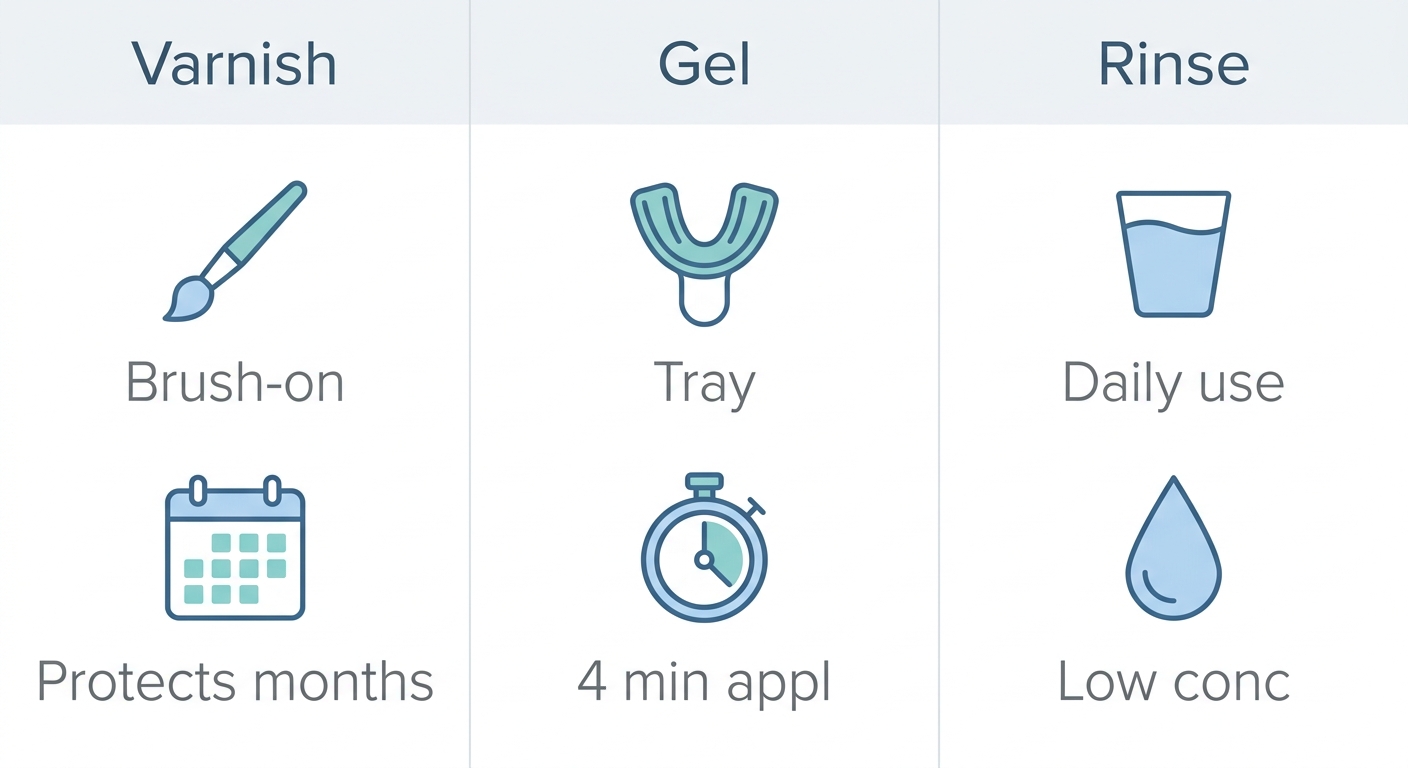
- Gel and foam: Applied in disposable or custom trays for roughly four minutes. Both provide a good mid-range concentration of fluoride, but the tray time can trigger gagging in some patients, and the fluoride is washed away or swallowed shortly after the session, limiting its residual effect.
- Rinse: A low-concentration, daily-use mouthwash that is completely self-applied at home.
- Varnish: Brush-painted directly onto teeth in about a minute — no trays, no gagging, and several pleasant flavours are available.
How Often Should Adults Get Professional Fluoride?
CDC clinical guidelines recommend that adults at low risk for cavities receive a professional application every 6 to 12 months, while those with moderate to high caries risk benefit from treatments every 3 to 6 months. Your risk level depends on factors like dry mouth, snacking habits, medication side effects, and past decay. At Diamond Dental Centre, our dentists evaluate your personal risk profile during your comprehensive exam and tailor the recall schedule to keep your enamel as strong as possible.
Combining Fluoride with Good Home Care
We recommend using a fluoridated toothpaste with at least 1,000 ppm fluoride, followed by an alcohol-free fluoride mouthwash at a separate time of day to avoid rinsing away the toothpaste’s benefit. Limit acidic and sugary drinks, and after an in-office treatment, wait about 30 minutes before eating or drinking to let the fluoride fully absorb.
For patients with orthodontic appliances, maintaining enamel integrity takes extra effort. Those undergoing Invisalign in New Westminster often face increased demineralization risk because attachments and aligners can trap plaque against tooth surfaces. Incorporating professional fluoride into the hygiene routine helps protect enamel throughout the alignment process.
Professional fluoride is one pillar of a complete preventive strategy — and it delivers the greatest benefit when combined with attentive daily care and advanced protective measures we’ll cover in the next section. If you’re ready to experience personalized preventive care in our recently updated New Look! clinic, we invite you to reach out to our New Westminster team.
Advanced Preventive Strategies for Long-Term Oral Health
Professional fluoride varnish and gel applications deliver immediate protection, but a truly comprehensive prevention plan looks beyond any single session. By making professionally applied fluoride a cornerstone of long-term care, we help adults reinforce their smiles against decay far more effectively than daily home routines alone can achieve.
According to the U.S. Centers for Disease Control and Prevention (CDC), untreated tooth decay and gum disease continue to affect a substantial number of adults, highlighting why advanced prevention matters. The in-office fluoride we use carries a higher concentration and remains in contact with tooth surfaces longer than toothpaste, enabling deeper remineralization of early decay and shielding vulnerable root areas. Adults with receding gums, medication-induced dry mouth, a history of multiple cavities, existing fillings or crowns, and those undergoing orthodontic treatment stand to gain the most from this elevated level of protection.
The table below highlights several oral health conditions that benefit especially from professional fluoride.
Oral Health Conditions That Benefit Most from Professional Fluoride
| Oral Health Condition | Why Professional Fluoride Helps |
|---|---|
| Gum disease or receding gums | Protects exposed root surfaces from decay. |
| Medication-induced dry mouth | Compensates for reduced saliva flow and higher cavity risk. |
| History of frequent cavities | Offers extra protection between routine checkups. |
| Existing fillings and crowns | Shields restoration margins where decay often begins. |
| Orthodontic treatment | Hardens enamel around brackets and wires that trap plaque. |
At Diamond Dental Centre in New Westminster, our personalized, education-focused approach matches professional fluoride recommendations to your individual risk factors. We use modern technology to support our guidance, helping you keep your smile healthy for the long run.
Many adults wonder how often fluoride treatments are necessary.
For answers to these common questions, continue to our FAQ section, where we address frequency, candidacy, and the lasting gains of professional fluoride for adults.
Common Questions About Adult Fluoride Treatments
After learning about advanced preventive strategies, you might question if fluoride still matters for adult teeth. It’s a frequent question in our judgement free space. Adult teeth can still develop decay, particularly as gums recede and expose roots, but fluoride helps remineralize these areas before a cavity forms.
Professional fluoride treatments are safe for adults, using clinically accepted concentrations. We typically recommend a quick application at your cleaning — usually every six to twelve months, tailored to your risk. It’s painless: a gel or varnish sits for a short time, no numbing required. Adults with sensitive teeth or a history of decay often benefit most, and we review your needs without judgement.
We encourage you to talk with our Diamond Dental Centre team about making fluoride part of your routine — a simple step toward lifelong healthy smiles.
A Lifetime of Healthy Smiles Starts with Fluoride
After answering common questions about adult fluoride, the benefits of fluoride treatment for adults extend far beyond cavity prevention. Professional fluoride applications remineralize enamel and support long-term oral health, making them a simple yet powerful tool for maintaining your smile.
At Diamond Dental Centre in New Westminster, our preventive care philosophy is centered on you. We tailor every treatment plan, including fluoride applications, to your unique dental needs and goals. We invite you to schedule a fluoride treatment or preventive checkup at our New Westminster clinic.
Get Professional Fluoride Care
Now that you’ve explored the science of fluoride remineralization and how professional treatments protect adult teeth, it’s time to put that knowledge into action. At Diamond Dental Centre, we provide personalized fluoride applications, including varnish treatments that relieve sensitivity and strengthen enamel against daily acid attacks. Our team in New Westminster tailors preventive care to your unique needs, helping you reverse early decay and maintain lifelong oral health. Whether you’re concerned about receding gums, sensitivity, or a history of cavities, we can guide you to the right fluoride strategy. Call us at (604) 449-7689 or book online to schedule your next visit. We care about your smile and are here to support your preventive journey.
Get Professional Fluoride Care