
In this list
- Sip Water Small and Often Throughout the Day
- Chew Sugar-Free Gum to Wake Up Your Saliva
- Set Up Your Bedroom for a More Comfortable Night
- Trim Back Caffeine and Alcohol
- Keep an Oral Moisturizer on Hand
- Review Your Medications with Your Dental Team
- Try Gentle Topical Rinses and Remedies
- Strengthen Enamel with Extra Fluoride
Practical Dry Mouth Tips for Seniors
Dry mouth tips for seniors begin by drinking enough water all day long. Xerostomia, or dry mouth, affects about 30% of people aged 65 or older, and up to 40% of those over 80, because of the medications taken for chronic conditions. Our team in New Westminster assists older adults in dealing with this common issue using easy, everyday methods.
Key Takeaways
- Drink water slowly and often during the day to keep your mouth moist.
- We recommend keeping some sugar-free gum around in case you can’t brush or rinse at certain times.
- To relieve dry mouth overnight, turn on a humidifier in your bedroom to add some moisture to the air while sleeping.
- One of the most effective dry mouth tips for seniors is to trim back caffeine and alcohol, since both can reduce moisture in the mouth.
- Many seniors are on multiple medications and some can cause dry mouth.
1. Sip Water Small and Often Throughout the Day
Drink water slowly and often during the day to keep your mouth moist. Since saliva is about 99% water and protects oral tissues, keeping hydrated will help prevent dryness.
Chronic dry mouth can increase your chances of getting cavities, sensitivity, and candidiasis, so it’s important to have good daily habits such as sipping water. Don’t drink caffeine or alcohol because they can make dry mouth worse.
dry mouth tips for seniors
Chew Sugar-Free Gum to Wake Up Your Saliva
We recommend keeping some sugar-free gum around in case you can’t brush or rinse at certain times. Chewing after meals will increase saliva flow and help neutralize acids and remineralize enamel, especially helpful for seniors managing dry mouth.
The extra saliva also helps freshen your breath and get rid of that sticky, gross feeling that can happen when you don’t have much saliva. It’s an easy habit to add to your day and requires no extra effort to alleviate that annoying feeling.
3. Set Up Your Bedroom for a More Comfortable Night
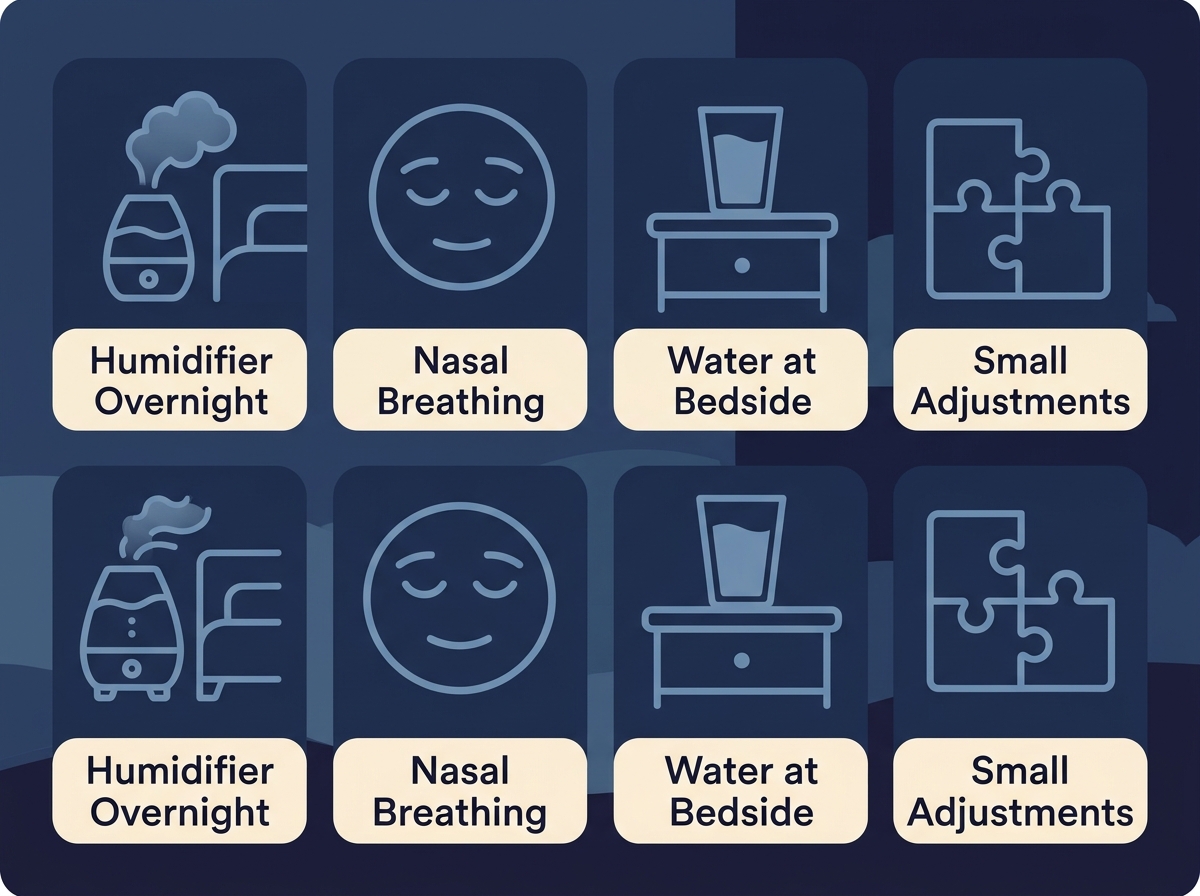
To relieve dry mouth overnight, turn on a humidifier in your bedroom to add some moisture to the air while sleeping. This little change can help make the environment less dry which can improve your dry mouth symptoms.
Breathe through your nose rather than your mouth when you rest because mouth breathing dries out oral tissue further. Give these things a try because everyone’s needs vary and it may take some trial and error to find what works.
4. Trim Back Caffeine and Alcohol
One of the most effective dry mouth tips for seniors is to trim back caffeine and alcohol, since both can reduce moisture in the mouth. We often remind our patients that small, gradual changes, like swapping an afternoon coffee for water or enjoying an alcoholic drink with a glass of water alongside, can make a noticeable difference over time.
Try these gentle adjustments, and see how your mouth responds; what works best is unique to each person.
5. Keep an Oral Moisturizer on Hand
In addition to cutting down on coffee and alcohol, finding relief from dry mouth is as easy as having a topically applied moisturizer like a gel, spray or rinse on hand at home or in your bag. These types of products can help ease your symptoms without increasing your saliva flow, so be sure to set your expectations accordingly.
If dry mouth persists, ask our same friendly team at the newly renovated clinic in New Westminster how we can help customize your care.
6. Review Your Medications with Your Dental Team
Many seniors are on multiple medications and some can cause dry mouth. Around 30% of adults over 65 and up to 40% of those over 80 have dry mouth, often due to their medications’ side effects.
Bring a list of all your medications and over-the-counter products with you to your next visit so we can work to pinpoint the cause of your dry mouth, and catch it in the early stages. Never stop taking any medication without consulting your doctor first.
7. Try Gentle Topical Rinses and Remedies
If adjusting medications doesn’t help, we recommend gentle topical rinses that can give some relief for seniors in New Westminster. Studies show that pilocarpine mouthwash and mucoadhesive tablets work well, as do 1% malic acid and a nice thyme-honey rinse.
These remedies ease the discomfort of dry mouth but don’t increase salivary flow rates. They’re a practical choice for older adults who can’t tolerate systemic dry mouth medications.
Strengthen Enamel with Extra Fluoride
As we get older, our teeth face their own set of challenges including gum recession and medication related dry mouth. One of the best dry mouth tips for seniors includes fluoride that remineralizes and hardens tooth structure in order to protect against cavities. Professional fluoride applications will protect exposed root surfaces and restoration margins as well as reduce sensitivity by coating dentin tubules. Ask our team whether these quick and painless treatments fit into your routine care.
Mixing and Matching What Works for You
We suggest trying out different dry mouth tips for seniors and mixing and matching until you find what works best for you. Try using a humidifier at night, nasal breathing, and limit yourself from caffeine and alcohol as well. Adjust based on how you feel and work with your dental team.
Signs It’s Time to Talk to a Dentist
If none of these measures in New Westminster are helping your symptoms, it might be time for our team to take a closer look.
Frequently Asked Questions
How does chronic dry mouth affect oral health and increase the risk of tooth decay?
Chronic dry mouth reduces saliva, which normally protects teeth by neutralizing acids and remineralizing enamel. Without enough saliva, seniors face higher risks of cavities, tooth sensitivity, and infections like candidiasis.
Are there specific medications common in seniors that typically cause dry mouth?
Yes. Approximately 30% of adults over 65 and up to 40% over 80 experience dry mouth, often due to medications for chronic conditions. Common culprits include urologic medications, antidepressants, and psycholeptics.
When should a senior consult a dentist about persistent dry mouth issues?
A senior should consult a dentist if dry mouth persists despite home remedies like hydration, sugar-free gum, or humidifiers. Early evaluation helps identify medication side effects or other causes before decay or infections develop.
Why do Seniors Experience Dry Mouth More Frequently than Younger Adults?
Seniors experience dry mouth more frequently due to the high number of medications they take for chronic conditions, which commonly cause salivary gland dysfunction. Age-related hormonal changes and systemic diseases also contribute.
What are some Simple Daily Tips to Relieve Dry Mouth Symptoms for Seniors?
Seniors can sip water often, chew sugar-free gum after meals, use a bedroom humidifier, limit caffeine and alcohol, and keep oral moisturizers like gels or sprays on hand. Gentle topical rinses such as 1% malic acid or thyme-honey can also help.
We Care About Your Smile
We’re happy to share dry mouth tips for seniors and ease age-related sensitivity with professional fluoride varnish.
Visit us in New Westminster at 129 E Columbia St, Unit 103. Call (604) 449-7689 or email reception@diamonddentalcentre.ca to schedule a visit — we’re here to help.